For most of its life, the pumpkin spice latte had a dirty little secret: there wasn't any pumpkin in it.
This is less scandalous than it sounds. Pumpkin spice is, after all, a spice blend. Nobody opens a jar of pumpkin pie spice, discovers cinnamon, nutmeg, ginger and cloves, then storms back into Kroger demanding to know where the squash went.
Coffee got held to a different standard.
Starbucks launched the Pumpkin Spice Latte in 2003 without pumpkin in the recipe and proceeded to sell an enormous number of them. It wasn't until 2015 that the company reformulated the drink to include pumpkin purée, a change that came after years of growing consumer interest in ingredient lists and more than a little mockery over the fact that the Pumpkin Spice Latte did not contain its namesake ingredient.
Today, Starbucks makes a point of saying the PSL contains real pumpkin.
And Starbucks isn't the only place where the distinction exists. Monin, one of the largest syrup suppliers to independent coffee shops, currently sells two products that illustrate the question almost perfectly. Its Pumpkin Spice Syrup contains the familiar spice flavor but no pumpkin. Its Spiced Pumpkin Purée contains actual pumpkin purée and has a thicker, richer texture closer to pumpkin pie filling.
So which one actually belongs in a pumpkin spice latte?
We went into this expecting to make the case for real pumpkin. It sounds obvious enough. If you're going to call something a pumpkin drink, putting pumpkin in it feels like an improvement.
Then we started looking at the flavor chemistry.
Turns out Starbucks wasn't necessarily wrong the first time.
Pumpkin Spice Is Mostly About Everything Except the Pumpkin
If you want to understand why, try a spoonful of plain canned pumpkin.
Not pumpkin pie filling. Just pumpkin.
We'll wait.
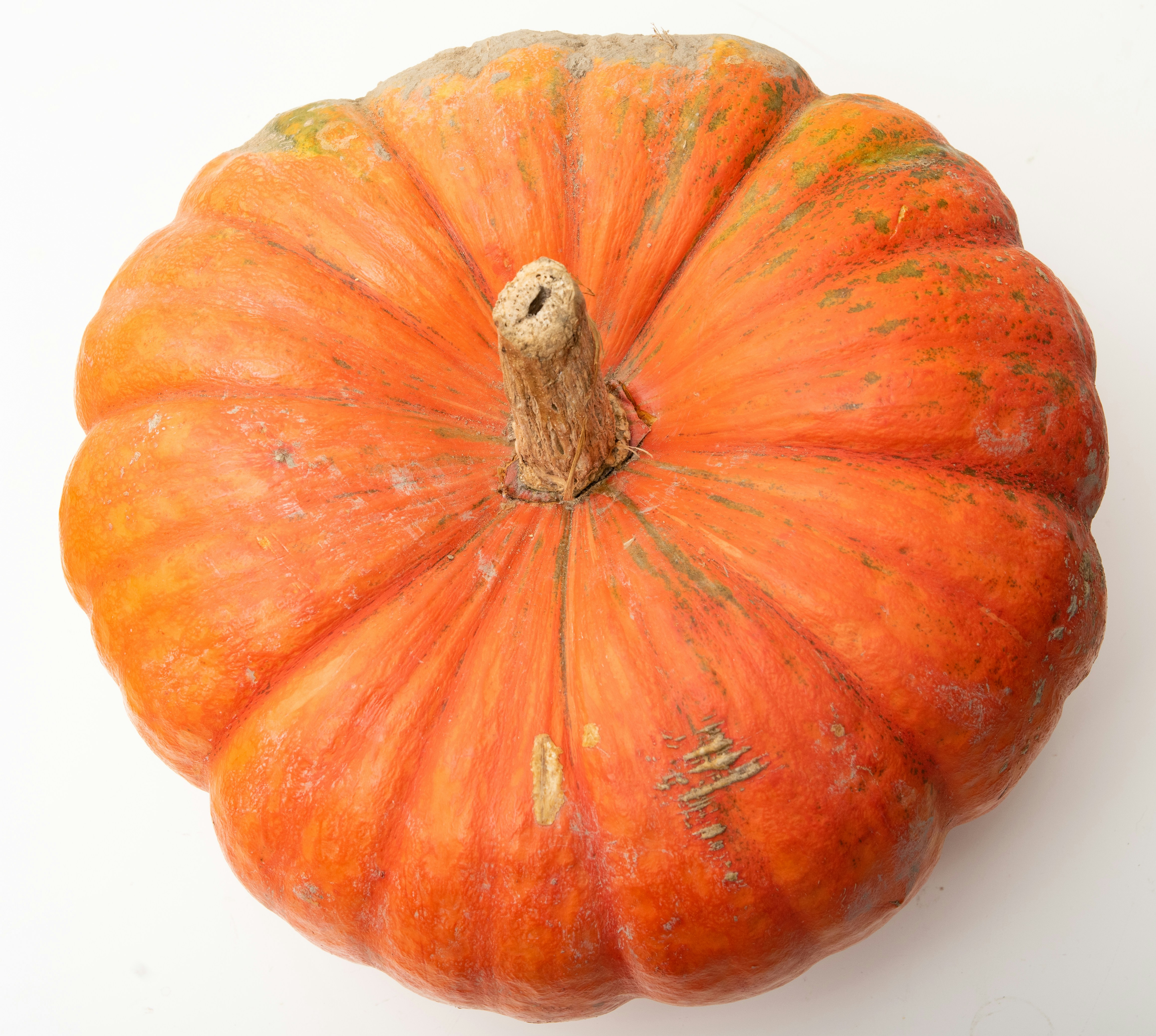
It's not flavorless, but it certainly doesn't taste like the thing Americans collectively lose their minds over every August. It's mild, a little earthy, a little sweet and unmistakably squash. Nobody has ever taken a bite of plain pumpkin purée and been immediately transported to a crisp October morning.
The spices do that.
Chemical & Engineering News has taken a wonderfully unnecessary—and therefore wonderful—look at the chemistry behind pumpkin spice. Cinnamon contributes compounds including cinnamaldehyde. Clove and allspice bring eugenol. Nutmeg contributes compounds such as sabinene, while ginger brings another collection of aromatic compounds including zingiberene.
Taken together, those spices contain hundreds of flavor and aroma compounds. Our brains don't need to consciously identify them individually. Add the right combination of cinnamon, nutmeg, ginger and clove to something sweet and creamy, and the brain does the rest.
Pumpkin pie.
That's the important distinction. A pumpkin spice latte was never really trying to taste like a pumpkin. It was trying to taste like pumpkin pie.
And pumpkin pie doesn't taste primarily like pumpkin either. Pumpkin provides the base; sugar, dairy, browning and spices turn it into the thing we recognize as dessert.
That doesn't make the pumpkin irrelevant, though. It just means its job is quieter.
Recent food-science research gives us a better idea of what that job actually is. A 2026 study examining different cooking methods found that heating pumpkin changes its aromatic profile substantially. Boiling reduced some of the green and earthy characteristics while increasing compounds associated with sweeter, caramel-like aromas. Other research comparing raw and steamed pumpkin found that cooking shifted the sensory profile away from green and cucumber-like aromas and toward chestnut, creamy, sweet and potato-like characteristics.
That's much closer to what we want in a latte.
So when we talk about putting “real pumpkin” into a drink, we're not really chasing the bright flavor of fresh pumpkin. We're looking for the softer cooked characteristics underneath the spices: body, sweetness, creaminess, a little earthiness and perhaps some roasted or caramel-like depth.
Suddenly the question isn't whether a PSL needs pumpkin to taste like pumpkin spice. Clearly it doesn't.
The question is whether those quieter characteristics make the drink better.
What Happens When You Actually Put Pumpkin in the Cup?
This is where the comparison between Monin's two pumpkin products gets useful.
Its Pumpkin Spice Syrup is a fairly conventional beverage syrup: sugar, water, natural flavors and salt. It flows through a pump, dissolves easily and delivers sweetness and pumpkin-spice flavor in one predictable dose.
The Spiced Pumpkin Purée is doing something different. Pumpkin puree is the second ingredient after sugar, and the product also contains water, spices, natural flavors and xanthan gum. Monin describes it as thicker and closer to pumpkin pie filling.
That thickness isn't incidental. Actual pumpkin brings solids, starches, sugars and fiber into the drink along with its flavor compounds. Research into processed pumpkin purée has identified a range of volatile aroma compounds and shown that processing creates additional flavor through reactions including the Maillard reaction.
In practical coffee-shop terms, pumpkin does something syrup can't do very well:
It changes the body of the drink.
A little can make a latte feel richer and more substantial. Combined with milk, espresso, sugar and warm spices, it can push the drink away from “coffee with pumpkin-spice syrup” and toward something that actually resembles pumpkin pie.
That's compelling.
It is also where you can ruin it.
A latte already has plenty of structure. Espresso brings dissolved solids, oils, acidity and bitterness. Milk brings protein, fat, lactose and its own texture. Start adding a thick pumpkin purée and eventually the drink stops becoming richer and starts becoming heavy.
The espresso disappears first.
Then the texture gets a little weird.
Keep going and you've made a pumpkin smoothie with a caffeine problem.
This is also where homemade “real ingredient” recipes often run into trouble. Ground cinnamon, nutmeg and other spices taste wonderful, but they don't dissolve. Add enough directly to a drink and eventually somebody gets the gritty last sip of doom.
Bon Appétit ran into exactly this while developing its own real-pumpkin latte. Using enough ground spice to produce the flavor they wanted also created an unpleasant texture. That's a useful reminder that the most literal version of a recipe isn't necessarily the best-engineered one.
Every ingredient has a job. More ingredients don't automatically mean more authenticity, and authenticity doesn't automatically mean a better drink.
Especially at 8:17 on Saturday morning with twelve tickets on the rail.
This Is Where Syrup Deserves a Defense
Specialty coffee can get strangely moral about syrup.
Real ingredients are good. Syrups are shortcuts. Homemade is authentic. A bottle with a pump on it is somehow evidence that we've given up.
That's silly.
A good syrup is an incredibly effective piece of beverage engineering.
It arrives consistent. It stores well. It moves through a pump. A barista can be trained to dose it in about eleven seconds. Sweetness and flavor arrive together, and the drink someone orders Tuesday afternoon should taste reasonably similar to the one they order Saturday morning.
Monin's Pumpkin Spice Syrup, for example, is shelf-stable at room temperature and doesn't require refrigeration. Compare that with making a fresh pumpkin sauce in-house and suddenly the boring bottle starts making a pretty persuasive argument for itself.
A homemade pumpkin sauce means another prep recipe, another container, another date label, another refrigeration requirement, another variable in consistency and another thing somebody has to remember to make before you run out.
None of that means you shouldn't do it.
It means the drink needs to be better enough to justify it.
That's the part of the “real pumpkin” discussion we think gets skipped.
Putting pumpkin in the ingredient list has marketing value. Starbucks understood that when it reformulated the PSL in 2015. “Made with real pumpkin” sounds better than “made with flavors that remind your brain of pumpkin pie.”
But customers don't drink ingredient lists.
If we add pumpkin and the drink tastes exactly the same—or worse—we haven't improved the product. We've improved the copy on the menu board.
There are easier ways to improve copy.
So We Tried to Answer a Different Question
Instead of asking whether pumpkin belongs in a pumpkin spice latte, we'd ask:
What job do we want the pumpkin to do?
If we want it to provide the primary flavor, we're probably going to be disappointed. The spices are simply louder.
If we want pumpkin to replace the spices, we're definitely going to be disappointed. Plain pumpkin and pumpkin spice aren't interchangeable.
But if we want it to provide a cooked-pumpkin undertone, a little more body and some of the creamy, sweet, roasted character associated with pumpkin pie?
Now we're interested.
That suggests a hybrid approach.
Rather than choosing between pumpkin spice syrup or real pumpkin, we'd start developing with both. Let pumpkin do the quiet work underneath the drink while the spice profile does the aromatic work on top.
Conceptually, the drink becomes:
espresso + pumpkin + spice + controlled sweetness + milk.
The ratios are where the actual development begins.
We'd start with less pumpkin than instinct tells us to use. Then we'd taste it against a syrup-only control.
Can we identify the pumpkin blind?
Does it improve the body without muting the espresso?
Does it still work once the drink cools?
What happens over ice?
What happens with oat milk?
Does anything settle after five minutes?
Does the last sip taste as good as the first?
Can a barista make it consistently without needing a culinary degree?
And perhaps most importantly: if we put the two drinks next to each other without telling anyone which contains real pumpkin, which one do people actually prefer?
That last test has a wonderful way of destroying our clever ideas.
Pumpkin May Be More Interesting Than Pumpkin Spice Right Now
There is another reason we're interested in separating the two.
Pumpkin spice itself is showing signs of maturity.
Tastewise's 2026 seasonal analysis puts pumpkin spice down 24.5% year over year within its seasonal dataset and classifies the flavor as being in a declining stage. That doesn't mean people suddenly hate pumpkin spice. They clearly don't. It means another standard PSL isn't much of an innovation anymore.
We saw the same thing while looking at this year's fall menus. Starbucks hasn't abandoned pumpkin—it has put it into more formats—but it is also giving more room to pecan, banana-bread-inspired flavors and cider. Other chains are pushing apple, caramel and other fall profiles.
Pumpkin spice has become the vanilla of autumn.
Everyone knows it. Plenty of people still want it. You probably ought to have it.
But putting two pumps of pumpkin spice into a latte and giving it a clever name isn't going to make anyone reconsider what a fall drink can be.
Actual pumpkin might.
Not because it is more virtuous or authentic, but because once you start thinking of pumpkin as an ingredient rather than “pumpkin spice” as a flavor, different combinations open up.
Pumpkin and brown butter starts sounding interesting.
So does pumpkin and maple.
Pumpkin and pecan makes almost too much sense.
Pumpkin with toasted marshmallow could lean into the roasted side. A little salt might pull out flavors that another pump of syrup would bury. Espresso with actual pumpkin, restrained spice and a pecan cream top could be considerably more interesting than Pumpkin Spice Latte #4.
That's where we think the opportunity is.
Not more pumpkin spice.
More things to do with pumpkin.
So, Should You Pumpkin Your Pumpkin Spice?
We started this expecting to say yes.
After looking at the chemistry, we're going to give you the much less satisfying answer:
Only if it makes the drink better.
A pumpkin spice latte does not need pumpkin to be legitimate. The familiar flavor is built primarily around spice, sweetness, dairy and the aroma associations our brains have spent years connecting to pumpkin pie. The original Starbucks PSL proved the concept rather convincingly for more than a decade before pumpkin ever entered the recipe.
Real pumpkin does bring something, though. It adds body and a subtle cooked flavor that syrup alone doesn't completely reproduce. Used carefully, it can make a drink feel less like flavored coffee and a little more like the dessert that inspired it.
The key words there are used carefully.
We wouldn't replace pumpkin spice with pumpkin. We'd put a restrained amount of pumpkin underneath a well-developed spice profile and let each do what it's good at. Then we'd blind-test it against the simpler version.
If the pumpkin version wins, great. Pumpkin your pumpkin spice.
If the syrup-only drink wins, serve that.
And if the only thing the pumpkin improves is our ability to write MADE WITH REAL PUMPKIN on the menu?
We'll save the purée for something else.
We're making drinks, not defending a thesis.
The best ingredient list is still the one that makes the best cup.